All aktivitet
Denne strømmen auto-oppdateres
- Siste time
-
ငါ သို့မဟုတ် မဟုတ်။ over satt ikke jeg eller
-
Vet ikke med overbevist, men jeg liker The Why Files, han er flink til å fortelle og gir rask debunks som regel. Spennende med anunnaki og historiske med atlantis osv.
-
Bruker AI til: Transkribere lyd til teksting og manus Innspill til idé og vinklinger Manusarbeid basert på opptak (og tar det over til tekstbasert klipping) Enkelte typer søk som ofte treffer bedre, feks finne ulike komponenter/deler Koding av enkle automatiseringer/script Oppsummering og utregning man ellers kunne brukt regneark til Har brukt: Jeg har brukt AI til bilde/videogenerering, men det er ikke noe jeg ønsker at verden skal ha mer av. Jeg tenker folk vil se folk, og verden trenger mindre drit. Jobber som innholdsprodusent, og har heller ikke så behov for å eliminere min egen jobb. Bruker det heller ikke til å generere «ferdig» tekst/e-poster, vi trenger ikke en verden hvor noen plotter inn til AI, og en annen AI dekoder.
-

SnowDOG's Picture humor thread V.4 *Ingen post uten bilde!*
Gunfreak svarte på osse-mon waits for alice sitt emne i Humor

-
Eva Weel Skram - Vendepunkt
-
Hvilke lover bryter han?
-
Han er gal. https://www.msn.com/en-us/money/markets/trump-has-already-hit-peak-tariff-morgan-stanley-says-his-new-15-levy-might-not-even-be-legal/ar-AA1WURFi?ocid=hpmsn&cvid=92410d8d74854d068bd4e3d1265b52f5&ei=19 While Trump quickly pivoted to Section 122 of the Trade Act of 1974 as a stopgap measure, Morgan Stanley economists argued any new trade framework will be legally vulnerable and mathematically weaker, and a return to last year’s aggressive “Liberation Day” tariff levels would be “quite complicated.” The flawed foundation of Section 122 The administration’s fallback plan relies on Section 122, a statute that allows the president to impose an across-the-board temporary import surcharge of up to 15% for 150 days. However, Morgan Stanley warns Section 122 could face legal challenges similar to those versus the IEEPA, especially given that it has never actually been used since its creation. The act provides the president authority to impose temporary import measures of up to 15%, limited to 150 days unless extended by Congress, with no formal investigative process required. But more important, Gapen writes, the statutory trigger is framed around a “balance of payments disequilibrium” rather than a goods trade deficit. In the 1970s context in which this law was written, Gapen explains, this had a concrete meaning related to the Bretton Woods regime in place since the end of World War II. In the 1970s era of fixed exchange rates, a payments problem meant severe reserve loss and forced currency adjustments. Today, under a regime of floating exchange rates and monetary sovereignty, Morgan Stanley economists said, “we would not view a persistent trade deficit as constituting a classic balance of payments ‘crisis’ or solvency constraint.“ Because of this mismatch, relying on Section 122 leaves the new tariff framework wide open to inevitable legal challenges. Beyond this legal fragility, Section 122 mechanically caps the administration’s trade ambitions. Replacing IEEPA with Section 122 would mechanically lower baseline headline tariffs from approximately 13% down to 11%, Morgan Stanley estimates. And if Congress fails to renew these tariffs by roughly August, the bank calculates nominal tariff levels would plummet to the mid-single digits, around 6% to 7%. The refund question A major lingering question following the Supreme Court’s decision to strike down the administration’s use of the IEEPA is the status of the tens of billions in tariff revenue already collected. However, because the Supreme Court ruling did not explicitly mandate whether the Treasury must pay back the collected tariff revenue, the path to recovering those funds remains legally ambiguous. Morgan Stanley expects the issue to be heavily litigated in lower courts. The timeline for this process is expected to be extensive, mirroring comments made by Trump, who said during a press briefing: “We’ll end up being in court for the next five years” over the matter. Given this lack of clarity and the anticipated legal battles, any potential refunds are expected to take a significant amount of time to actually reach the broader economy. When they do arrive, Morgan Stanley forecasts a “midpoint scenario” of partial and delayed refunds totaling approximately $84 billion to $85 billion. Alternatively, a “limited/minimal” scenario projects the refunds could be as low as roughly $56 billion. Because of the relatively limited size and the extended, complicated timeline, economists predict these refunds will ultimately result in very little change to their broader macroeconomic and supply outlooks. Should the administration eventually need to fund these refund issuances, Morgan Stanley expects it will likely do so using Treasury bills, and any resulting rise in yields is expected to be short-lived. “Given the lack of clarity by the Supreme Court, refunds are likely to take a while to reach the economy,” the bank wrote—and these refunds would be for companies, not consumers. The complicated picture Because of the strict 15% cap, the temporary nature of the authority, and the legally untested “balance of payments” trigger, raising tariffs back to the extreme “risk” scenarios seen around last year’s “Liberation Day” would be “quite complicated,” Morgan Stanley said. To rebuild those sweeping tariff walls, the administration would have to rely on slow-moving, sector-specific Section 232 or Section 301 investigations, which can take months or even years to fully implement. For the broader U.S. economy, the unraveling of the administration’s primary tariff tool is a distinct positive, and if the Section 122 tariffs ultimately expire after 150 days without a legislative replacement, the macroeconomic picture would brighten further. A material drop in tariff rates in the third quarter of 2026 could provide a significant uplift to domestic demand, supporting corporate margins, labor demand, and household spending. For now, the Supreme Court ruling has effectively installed a strict near-term ceiling on trade barriers, substantially neutralizing the threat of runaway tariff escalation. What’s unknown, of course, is whether Trump will accept it. Det kom fram at Seksjon 122 som benyttes for 15 % grunntollsats for 150 dager framover, ikke er så legalt sikkert som antatt fordi denne fullmakten opprinnelig er ment for meget forskjellige omstendigheter og var utformet for spesielle situasjoner som avverge presidentbruk i fredstid som stabil økonomisk tid. På norsk ment det "betalingsbalanse" https://brendonbeebe.substack.com/p/section-122-and-the-150-day-tariff Section 122 of the Trade Act of 1974—codified as 19 U.S.C. § 2132 and titled “Balance-of-payments authority”—is one of the broadest and most time-limited unilateral tariff authorities Congress has ever written. It was designed for “fundamental international payments problems,” not for ordinary trade skirmishes. When the statutory trigger is met, the President “shall proclaim” (the statute uses that word) a temporary import measure for no more than 150 days unless Congress extends the period by statute. The menu of tools is intentionally blunt: a temporary across-the-board import surcharge (up to 15% ad valorem), import quotas, or both. The trigger language is equally specific. Section 122(a) frames its use around three scenarios: • dealing with “large and serious” U.S. balance-of-payments deficits; • preventing “imminent and significant” dollar depreciation in foreign exchange markets; or • cooperating with other countries to correct an international balance-of-payments disequilibrium. Two design choices matter for understanding why this authority is suddenly in the headlines: First, Section 122 is fast. Unlike many other tariff tools, it does not require a predicate investigation or agency fact-finding process before the President proclaims the surcharge. Second, Section 122 is capped. Congress hard-coded both the rate ceiling (15%) and the duration ceiling (150 days, absent an Act of Congress). Why Congress wrote it in the shadow of the Nixon surcharge To understand why Section 122 exists, you have to go back to the “Nixon shock”—the early-1970s monetary crisis era when the U.S. was navigating pressure on its international reserves and the global monetary order. On August 15, 1971, Richard Nixon issued Proclamation 4074, declaring a national emergency and imposing a 10% supplemental duty on “all dutiable articles” to address what the proclamation described as a worsening balance-of-payments situation and threatened U.S. international reserves. That move became a key reference point in later legal and policy debates about whether broad emergency statutes could be read to authorize tariffs at all. In modern summaries of that episode, the Congressional Research Service links the 1971 surcharge directly to later arguments over the scope of emergency economic powers, noting that President Nixon used the Trading with the Enemy Act framework (a precursor conceptually linked to later emergency-powers debates) to impose a 10% tariff during a monetary crisis. Congress’s solution in the mid-1970s was not to erase presidential flexibility, but to box it in. As the CRS tariff-powers report explains, Section 122 was enacted “following” Nixon’s temporary 10% balance-of-payments tariff; and contemporaneous legislative commentary suggested it was not expected to be used much in the post–fixed-exchange-rate world. Section 122 entered the U.S. Code as part of the Trade Act framework that Gerald Ford signed into law on January 3, 1975. In his signing remarks, Ford emphasized that this law would shape U.S. trade relations for years—reflecting how Congress was building a durable set of trade tools (and limits) rather than improvising from crisis to crisis. Why “balance of payments” is a narrower trigger than it sounds A core confusion—especially in today’s politics—is that “balance of payments” sounds like a synonym for “trade deficit.” It is not. In the CRS analysis of Section 122, the phrase “balance-of-payments deficits” is treated as a term of art that likely refers to broader concepts of international payments that include capital flows, not simply the net of imports and exports of goods and services. This is why Section 122 often sits awkwardly in modern tariff debates. In the mid-1970s, the U.S. was transitioning away from the Bretton Woods fixed-exchange-rate system, and some of the older “overall” balance-of-payments accounting frameworks fell out of favor; CRS notes that the U.S. ceased reporting certain balance-of-payments measures after 1976, and commentators at the time viewed some of these metrics as obsolete after the shift to floating rates. Even the statute itself flags the conceptual distinction. Section 122(a) speaks in balance-of-payments terms (deficits and currency pressure), while Section 122(c)—the rarely mentioned mirror provision that authorizes temporary import liberalization—uses “balance-of-trade” language when discussing persistent surpluses and limits the President to small temporary duty reductions. CRS highlights that courts often treat such drafting differences as intentional. In plain English: Section 122 was written for a world where “payments problems” meant something closer to a currency-and-reserves emergency than to a campaign slogan about trade gaps. The limits baked into the statute Section 122 looks sweeping at first glance—up to 15% on essentially everything—but its internal constraints are unusually explicit. Several of these constraints are easy to miss if you only focus on the “15% for 150 days” headline. The hard cap and the congressional gate The surcharge authority is explicitly time-limited: “for a period not exceeding 150 days (unless such period is extended by Act of Congress).” That parenthetical matters: it’s Congress reserving the right to decide whether a temporary emergency tariff becomes semi-permanent. Nondiscrimination is the default—selectivity is the exception The statute instructs that import-restricting actions should be applied “consistently with the principle of nondiscriminatory treatment.” But it also contains a pressure-valve: if the President determines the purpose is best served by acting against one or more countries with large or persistent balance-of-payments surpluses, the President may exempt all other countries. Broad and uniform product coverage, with narrow carveouts Section 122 aims at macroeconomic stabilization, not sectoral protection. It requires “broad and uniform” product coverage and permits only limited product exceptions tied to economic-need concerns (such as lack of domestic supply at reasonable prices, need for raw materials, avoiding serious supply dislocations, goods already restricted, goods in transit, and similar factors). It also says the authority may not be used for the purpose of protecting individual domestic industries from import competition. Quotas are legally and diplomatically harder than surcharges The statute allows quotas, but only if international agreements to which the U.S. is a party permit quotas as a balance-of-payments measure—and only if the imbalance cannot be dealt with effectively through a surcharge. It then adds quantitative guardrails (e.g., quotas should not drop below representative historical import levels and must account for consumption changes). Built for speed, not for litigation-tested certainty Because Section 122 had never been used as of 2025, CRS emphasized that courts had no occasion to interpret its language and boundaries—meaning that, until very recently, its practical meaning was largely theoretical. Presidents who have used Section 122 A key fact that surprises even trade lawyers: for decades, no president invoked Section 122. In 2025, CRS stated plainly that Section 122 “has never been used.” As of February 20, 2026, reporting indicates Section 122 has now crossed from “dormant” to “deployed,” apparently for the first time: * Donald Trump — Announced he would sign an order imposing a 10% global tariff under Section 122 for the statute’s maximum 150-day period, framing it as a rapid replacement for sweeping tariffs the Supreme Court of the United States held could not be imposed under IEEPA. He said the new duty would take effect the following week and would be layered “over and above” existing tariffs. In the same remarks, he said existing tariffs under other authorities (including “Section 232” and “Section 301”) would remain “in full force and effect,” while his administration would initiate further Section 301 investigations—a signal that Section 122 was being used as a time-limited bridge while slower-moving tariff tools are spun up. Asked about the 150-day limit and the need for congressional extension, he responded: “We have a right to do pretty much what we want to do.” The practical constraints no statute can waive Even if you accept the statute’s broad language on its own terms, Section 122 carries real-world constraints that tend to get lost in the political theater. Congress controls the “day 151” question The statute’s design forces a fork in the road: either the measure ends at 150 days, or Congress passes an Act extending it. That structure is not an accident; it is Congress explicitly choosing temporariness as the default for this particular tariff authority. The WTO and IMF process is part of the background radiation Section 122’s quota authority is explicitly conditioned on what international trade or monetary agreements permit. In the global trading system, balance-of-payments import restrictions have long been treated as extraordinary measures subject to consultation and discipline. The World Trade Organization explains that members using balance-of-payments restrictions under the relevant GATT provisions face consultation requirements intended to ensure such measures are temporary and justified. Those consultations are informed in part by the International Monetary Fund, which historically plays a role in assessing whether a member is experiencing balance-of-payments difficulties. “Tariffs are taxes,” and taxes create political enemies quickly Tariffs function as taxes collected at the border on imported goods. That doesn’t settle who ultimately bears the cost in any specific industry or contract, but it does explain why tariffs rapidly become a constituency fight—importers, domestic producers relying on imported inputs, consumers, and exporters facing retaliation all have different incentives. Litigation risk rises when a dormant statute becomes an active weapon CRS’s point that Section 122 had never been used matters because it implies there is little jurisprudence interpreting phrases like “fundamental international payments problems” or “large and serious” balance-of-payments deficits in this specific statutory context. When legal meaning is unsettled, disputes tend to shift from “does the President have authority?” to “did the President satisfy the statute’s predicate conditions?”—especially when a statute’s trigger language is economically technical but politically elastic. The “bridge” problem One reason Section 122 is suddenly attractive is that it is immediate, while other trade tools can be slower. Reuters noted, for example, that investigations under Section 301 generally take months—an awkward mismatch with a tool that expires after 150 days unless Congress acts. Denne artikkelen er meget opplysende omkring problemet med å bruke Seksjon 122-fullmakten, som kan utfordres legalt og avvises av det amerikanske rettsvesenet basert på faktumet om at det knyttes spesielle betingelser til bruk av denne fullmakten, som dermed forklare hvorfor den hadde blitt liggende urørlig siden 1975, den er en tidsavhengig fullmakt som i realiteten er utdatert i dagens økonomiske situasjon, og noe som ikke kan benyttes i handelskrig eller som del av ens politikk. Det kan aktuelt skje at høyesteretten måtte også avvise seksjon 122-fullmakten. Og da er vi kommet til refusjonsspørsmålet, minst 179 mrd. dollar må tilbakebetales, men dette ville ikke Trump høre snakk om, og vil istedenfor innlede en legal prosess for å avverge refusjon inntil punktet at bare 56 mrd. dollar kan sendes tilbake - som da betyr i praksis statlig tyveri. Da det første dommervedtaket kom, skulle IEEPA-tollsatsene ha blitt satt på hold som det er regel for, men Trump regelrett nekte og forbrøt seg mot den amerikanske loven ved å ta fordel av Roberts` stupiditeten omkring absolutt immunitet for presidentembetet. Dette kan skape meget sterk bitterhet for store deler av forretningsstanden som hadde vært tvunget til å betale av egne lommer fremfor å overføre byrdene på kundene og dermed reddet den amerikanske økonomien fra kollaps, ikke minst gjennom svimlende pengeforbruk på børsene. For dem har Trump blitt en tyv og en katastrofe, og ved å nekte å stoppe tollvanviddet - og endog vil ta i bruk andre fullmakter som er legalt sett mindre stødig enn IEEPA - har de nå en meget god grunn for å bryte med ham og republikanerne. Uansett kan ikke Trump forøke tollsatsene på egen ansvar uten legal risiko og større tilbakeslag, spesielt i et valgår. Om han skulle fortsette - vil det enda mer verre. Han hadde griseflaks ved at oligarkene betalt ut av egne lommer, at land som EU og Japan vil helst unngå uroligheter i det som var et dårlig år fram til høsten 2025, og et AI-boble i børsene med enorm pengeforbruk, halvparten av veksten i virkeligheten skyldes AI selv. Men nå ser det ut som flaksen kan være oppbrukt, han er i full gang med å bli sterkt upopulært, blant de selvstendige som utgjør 50 % av velgermassen er det nå ned til bare 24 % som holdt med ham. Selv yngre som misliker demokratene, misliker Trump enda mer. Og utenrikspolitisk sett er det sett at Trump gjør seg meget lite likt, hans aggressivitet mot EU og støtte til Orban og Fico har gjort europeerne sint mens stolte asiater fant seg dypt frustrert - oljesjeikene og andre bare jabbe med Trump. Under FN-avstemningene har man sett et stort fall for USA, selv om Kina bli ikke mer populært pga. Xis kultursjåvinistiske holdninger. Tollvanviddet burde avsluttes om det finnes en fornuftig ledelse i det hvite huset. Der vet man at nesten hele administrasjonen er sterkt mot Trumps sykelige tvangstankene omkring toll.
-

Russlands invasjon av Ukraina [Ny tråd, les førstepost]
torbjornen svarte i et emne i Politikk og samfunn
- I går
-
Ønsker dere også en fin og god natt 🥱🥱💤💤😴😴
-
Takk for at du tok deg tid til å gi et ordentlig svar! Eksemplene du nevner er gode eksempler på når KI kan gi større verdi enn den gamle måten å gjøre det på.
-

Hvilken sang hører du på nå?
Ciaran og Ciara ( Cassidy Tvillingene ) svarte på Nipoe sitt emne i Lekeplassen
Nå hører vi to på: Come Together - The Beatles.♥️♥️♥️♥️ -
Telletråden - hvor langt klarer vi å telle?
Ciaran og Ciara ( Cassidy Tvillingene ) svarte på Sondre sitt emne i Lekeplassen
147 683 -
Vi ønsker alle sammen en god natt.🥱🥱💤💤😴😴
-
Her nede på havna ( LEK )
Ciaran og Ciara ( Cassidy Tvillingene ) svarte på JoanTheMan sitt emne i Lekeplassen
N-4K0 er nede på havnen og nå serverer vi nattmat.😋😋 -
Banner N-4K0 for vi tenker at det er ennå godt at han ikke tror at du har blitt en gammeldansk.
-
Vi ønsker alle sammen en god og fin natt.🥱🥱💤💤😴😴
-
Maskinførers digre nye chattetråd 😀
Ciaran og Ciara ( Cassidy Tvillingene ) svarte på Maskinfører sitt emne i Sosialt
Vi ønsker dere en fin og god natt.🥱🥱💤💤😴😴 -
I alleste dager. Aldri sett før. Hvor finner jeg dette?
-
Vi ser nå tegn på begynnelsen av den siste fasen av nedbrytende demobilisering av et samfunn. Trump's new fury farming crusade is pushing America toward the inevitable | Opinion AJanuary 2026 Gallup poll showed that 89% of all Americans expect high levels of political conflict this year, as the country heads toward one of its most decisive midterm elections ever. Gallup, however, was stating the obvious. It is a surprise that not all Americans feel this way, judging by the coarse, often outright racist discourse currently being normalized by top American officials. Some call this new rhetoric the “language of humiliation,” where officials refer to entire social and racial groups as “vermin,” “garbage,” or “invaders. The aim of this language is not simply to insult, but to feed the "Rage Bait Cycle“—tellingly, Oxford’s 2025 Word of the Year: A high-ranking official attacks a whole community or ”the other side“; waits for a response; escalates the attacks; and then presents himself as a protector of traditions, values, and America itself. This does more than simply ”hollow out“ democracy, as suggested in a Human Rights Watch report last January; it prepares the country for “affective polarization,” where people no longer just disagree on political matters, but actively dislike each other for who they are and what they supposedly represent. How else can we explain the statements of US President Donald Trump, who declared last December: “Somalia... is barely a country... Their country stinks and we don’t want them in our country... We’re going to go the wrong way if we keep taking in garbage into our country. Ilhan Omar is garbage. She’s garbage. Her friends are garbage.” This is not simply an angry president, but an overreaching political discourse supported by millions of Americans who continue to see Trump as their defender and savior. We are entering a state of regime cleavage—a political struggle no longer concerned with winning elections, but one where dominant groups fundamentally disagree on the very definition of what constitutes a nation. This polarization reached a fever pitch at the 2026 Super Bowl, where the halftime selection of Puerto Rican artist Bad Bunny ignited a firestorm over national identity. While millions celebrated the performance, Trump and conservative commentators launched a boycott, labeling the Spanish-language show “not American enough” and inappropriate. The rhetoric escalated further when Homeland Security Secretary Kristi Noem suggested Immigration and Customs Enforcement agents would be “all over” the event, effectively ostracizing countless people from their right to belong to a distinct culture within American society. The weaponization of culture and language was not limited to the stage; it split American viewers into two distinct camps: those who watched the official performance and those who turned to an “All-American” alternative broadcast hosted by Turning Point USA featuring Kid Rock. This “countering” is the very essence of the American conflict, which many have rightly predicted will eventually reach a breaking point akin to civil war. That conclusion seems inevitable as the culture war couples with three alarming trends: identity dehumanization; partisan mirroring—the view that the other side is an existential threat; and institutional conflict—where federal agencies are perceived as “lawless,” sitting congresswomen are labeled “garbage,” and dissenting views are branded as treasonous. This takes us to the fundamental question of legitimacy. In a healthy democracy, all sides generally recognize the legitimacy of the system itself, regardless of internal squabbles. In the United States, this is no longer the case. We are entering a state of regime cleavage—a political struggle no longer concerned with winning elections, but one where dominant groups fundamentally disagree on the very definition of what constitutes a nation. The current crisis is not a new phenomenon; it dates back to the historical tension between ‘assimilation“ within an American ”melting pot“ versus the ”multiculturalism“ often compared to a ”salad bowl.“ The melting pot principle, frequently promoted as a positive social ideal, effectively pressures immigrant communities and minorities to ”melt“ into a white-Christian-dominated social structure. In contrast, the salad bowl model allows minorities to feel very much American while maintaining their distinct languages, customs, and social priorities, thus without losing their unique identities. While this debate persisted for decades as a highly intellectualized academic exercise, it has transformed into a daily, visceral conflict. The 2026 Super Bowl served as a stark manifestation of this deeper cultural friction. Several factors have pushed the United States to this precipice: a struggling economy, rising social inequality, and a rapidly closing demographic gap. Dominant social groups no longer feel “safe.” Although the perceived threat to their “way of life” is often framed as a cultural or social grievance, it is, in essence, a struggle over economic privilege and political dominance. There is also a significant disparity in political focus. While the right—represented by the MAGA movement and TPUSA—possesses a clarity of vision and relative political cohesion, the “other side” remains shrouded in ambiguity. The Democratic institution, which purports to represent the grievances of all other marginalized groups, lacks the trust of younger Americans, particularly those belonging to Gen Z. According toa recent poll by the Center for Information & Research on Civic Learning and Engagement (CIRCLE), trust in traditional political institutions among voters aged 18-25 has plummeted to historic lows, with over 65% expressing dissatisfaction with both major parties. As the midterm elections approach, society is stretching its existing polarization to a new extreme. While the right clings to the hope of a savior making the country “great again,” the “left” is largely governed by the politics of counter demonization and reactive grievances—hardly a revolutionary approach to governance. Regardless of the November results, much of the outcome is already predetermined: a wider social conflict in the US is inevitable. The breaking point is fast approaching. Det er hva som var sett i Syria fram til 2011 da det oppsto en rift mellom de moderatprogressive kreftene og de sosialkonservative kreftene som et resultat av økt ulikhet, større identitetspolarisering og ekstremisme som ved en feil var tillatt av Assad-regimet som tiltak mot den amerikanske okkupasjonen i 2003-2009. Det var også sett i Bosnia Hercegovina i 1989-1991 hvor det oppsto større og større uenighet om identiteten av delstaten den gang etter å ha adoptert multikulturalisme med aksept av forskjellige verdier siden Tito byttet ut den totalitære modellen med den inkluderende modellen i 1960-tallet i hans kommunistiske enmannsdiktaturet. Til å begynne med var kroater, serber og bosniere forent, men etter hvert begynte det sosiale limet å gå i oppløsning gjennom 1980-årene idet ulike politikere begynte å spille på forskjellene fremfor på det som forente dem, til tross for mange århundrer med sameksistens med undertrykkelse, forskjellbehandling og vold som vist for alle hvilken farepotensialitet som finnes ved å bryte seg ut. DET HENDT AKKURAT SOM I USA I DET SISTE. Retorikk. Polarisering. Sviktende tiltro på det politiske systemet. Deshumanisering. Rasistiske og fornedrende språkbruk for å skape fiendebilde man vil utløse undertrykkelse, hets og sist vold mot. Vi ser nå konturer av et enormt sivilisasjonssammenbrudd i det nordamerikanske samfunnet, de hvite med rasistiske motiv mot de progressive kreftene støtter av "ikke-hvite" som utgjør så mye som 40 % av befolkningen. Demokratene er intet mindre enn voktere som vil beholde systemet og deretter samfunnet, men de har mistet mye tillit fordi de hadde gjort tre katastrofale feil; for det første ved å svinge for langt til høyre i 1996, for det første ved å ikke fatte den samfunnsfiendtlige ambisjonen av republikanerne inntil det var for sent, og for det tredje ved å fortsette med amerikanske tradisjoner. Republikanerne som erklært seg amerikansk, er i virkeligheten så uamerikansk som mulig ved å gå nedover det samme sporet som europeerne fra 1880-1940 perioden, deres parti har for lengst sluttet med å opphøre som et amerikansk mobiliseringsparti - slik at det har mer til felles med et hypereuropeisk parti. Dette klarer ikke mange amerikanerne å oppfatte, spesielt ikke at republikanerne er ødeleggerne i likhet med de syriske islamistene i 2011 og de bosniskserbiske/bosniskkroatiske partiene i 1991. Islamistene i 2011 nekte å akseptere ideen om et sekulært multireligiøst samfunn, mens separatistkreftene i 1991 nekte å akseptere ideen om sameksistens og samfunnfred. Nå er USA i ferd med å gå nedover den samme vegen som Syria og Bosnia fordi et parti fornekte ideen om den multikulturelle sammensmeltningen til fordel for ideen om felleskulturell sammensmeltning fra rasehygienens tid. Da året 1965 ebbe ut, hadde alle minoritetsamerikanerne fått deres politiske rettigheter og menneskerettigheter som var fornektet dem i 1880-1965, samtidig som amerikanerne innså de måtte slå følge med resten av verden om å inkludere fremfor å ekskludere "det som ikke passe inn" pga. disses språk, kultur, tro og hudfarge. Hva disse rasistiske idiotene - som sannsynlig utgjør 28 % (visse mene 34 %) av befolkningen, og minst 70 til 75 % av de republikanske velgere - ikke evne å innse, er at inkludering av fremmed kultur hadde alltid hendt reguleringsfritt med unntak av de fargede og asiater som siden 1880-tallet var utstengt pga. disses hudfarge. Likedan med degos selv om disse latinos utgjorde betydelige deler av befolkningene i de søndre grensedelstatene. Dette hendt gjennom sosial press og tilpasningsønske slik at ethvert som kom til USA, før eller senere integreres, gjerne i løpet av et par generasjoner. Men disse gir aldri slipp på sitt kulturell arv - hamburgeren, som mange anså være amerikansk, i virkeligheten skyldes tysk immigrasjon til USA. Svært mye av det som utgjør amerikansk kultur er i virkeligheten importert og bearbeidet inn det "felleskulturelle" samfunnet som svært raskt avsløres å være multikulturelt - bare for disse med hvitt hud. Ennå hadde de fargede og andre satt deres uutslettelig preg på USA, til tross for at rasistene den gang og i dag vil ikke erkjenne det, og da nazistenes grusomhetene offentliggjøres samtidig som avkoloniseringen skjøt fart, var det en voksende erkjenning at man ikke kunne fortsette å forbli rasistisk - spesielt ikke når lovene er fargeblindt. Så snart minoritetsamerikanerne tok i bruk lover for å få de samme rettigheter som de andre, fulgt dette til vold, drap og ondskap i 1945-1965 med tusener av ofre. Dette satt USA i sterk forlegenhet i møte med resten av verden, spesielt de nye statene. Det vil bli langt mye verre ved å gjenoppta dette rasetyranniet. Nå er det meget klart at USA går mot en katastrofe. Begge parter føler nå voksende avsky for hverandre, Trumps vanviddet har fulgt til meget farlige stemninger hvor det er klart at altfor mange er villig til å gi avkall på sine rettigheter og endog sin egen fremtid til fordel for strømningene bak Trump - rasehegemoni, hvithet, overlegenhet - med andre ord, fascisme eller endog nazisme. På den andre siden føler man voksende raseri og forvirring som kan raskt munne ut i voldsomme reaksjoner, motsetninger har blitt for dypt, for sterk, slik at man etter hvert mer og mer bli sintere og sintere. Den ene velge å fornedre seg selv og bli mer og mer ekstremistisk mens den andre mer og mer mente enhver de verdsette er i sterk fare, og må forsvares - til slutt med alle midler. Det er for sent. Mange millioner vil dø, fordrives eller forvitre over det som kan skje i 2027-2030 når USA faller fra hverandre - i slutten vil de progressive kreftene vinner ettersom de vil ha størst mobiliseringsevne og inkluderingsvilje, men ikke før alt har blitt ødelagt.
-
 Det får du mene. Kort oppsummert svarer jeg at det ikke må muskler til for å få seg dame. Og at jeg mener at det er viktigere at menn får seg bedre selvbilde enn at de får seg muskler.
- 75 svar
-
- 1
-

-
Det er veldig lett å forstå. Bensinprisene er rekordlave. Ulovlige innvandrere blir kastet ut. USA settes først. Tariffer innføres. Amerikanerne får akkurat det de stemte på, og er dermed naturligvis fornøyd. Kanskje vanskelig for nordmenn å forstå, der man blir hjernevasket av media som daglig prøver å finne noe som kan sette Trump i dårlig lys og der vår egen ledelse ødelegger landet sakte men sikkert med stadig høyere skatter og avgifter, mer innvandring og Norge sist politikk.
-
Star wars! 👍🙂 Jada jada, man må spøke litt. 😄
-
Ok jeg er faktisk litt enig med deg Anonymous poster hash: 4b33e...963
-
Bor du i Haugesund ? 😀
-
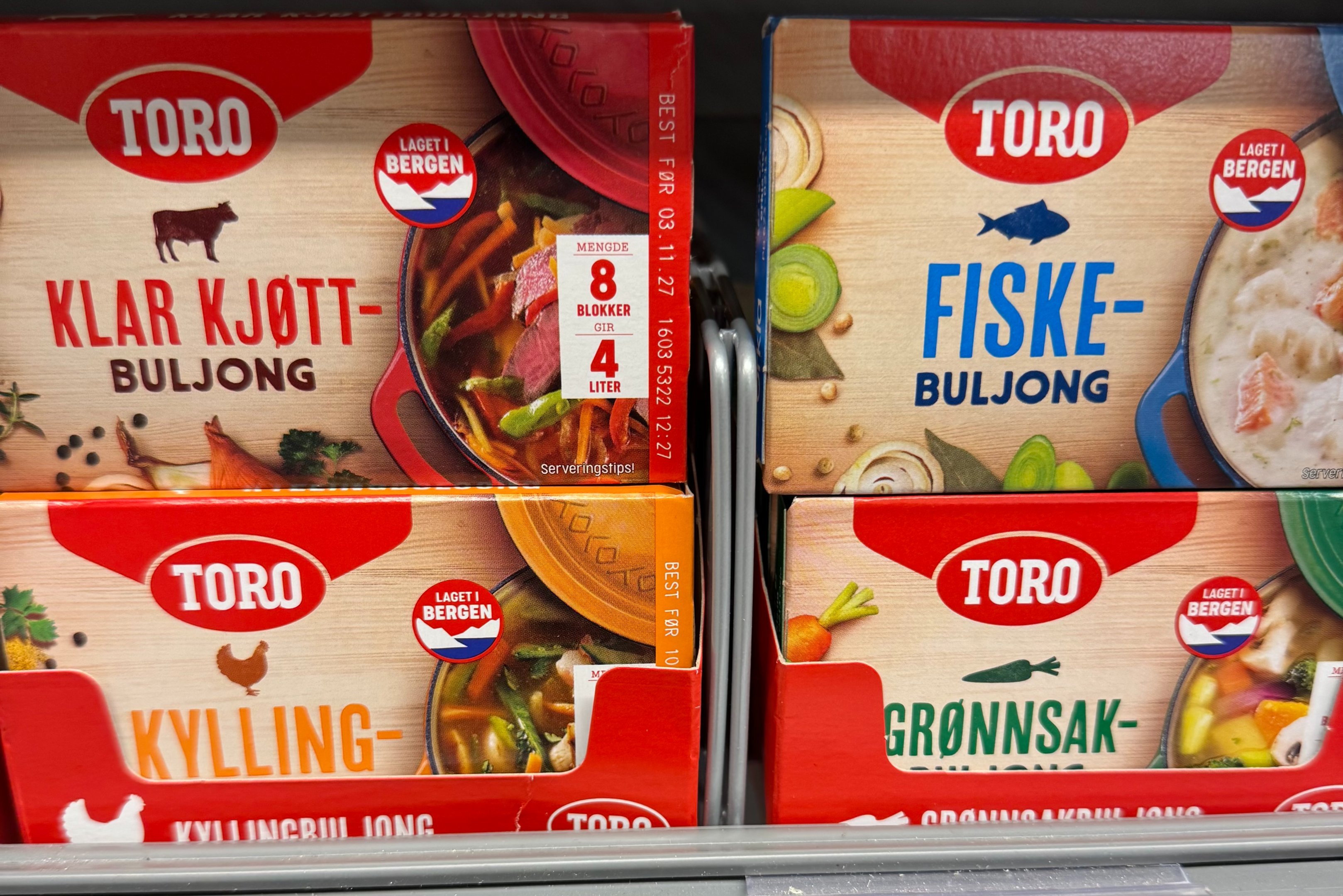
Det var disse fire jeg tenkte på, men de er vel geometrisk sett noe annet enn terninger: