
Ola Norman
-
Innlegg
752 -
Ble med
-
Besøkte siden sist
Innholdstype
Profiler
Forum
Hendelser
Blogger
Om forumet
Alt skrevet av Ola Norman
-
Ja eller så heter man Jay og kjører micron d-die med søppel timings på 5600MT/s hastighet i reviews av nye cpuer 🤣
-
Mainstream reviewers har endelig klart å kjøre litt høyre minnehastighet (som vi overklokkere allerede har kjørt typ 2 år allerede) Trege EXPO timings, men viser litt scaling iallefall https://www.computerbase.de/2024-08/ryzen-9-9950x-ryzen-9-9900x-gaming-performance/
- 319 svar
-
- 1
-

-
Ja jeg liker konkurrere på hwbot, og da trenger man beste mulig silicon quality.. Har bestilt 3x 9950x. Blir å beholde den beste og selge de 2 andre et par tusen under nypris. Har gjort samme med 7000 serien flere ganger (har nesten samtlige rekorder for 7800x3d og 7950x3d)
- 319 svar
-
- 4
-
-
Jeg blir nok å legge et par ut for salg på finn.no iløpet av neste uke (til endel under nypris)
-
Jeg mente heller at du muligens kan bestille cpuen med rabatt kode, men de ikke får cpuene inn på lager før om typ 2 uker
-
Spørs om du rekker det, historisk så bruker de ligge litt etter... Mulig du kan bestille, men tviler sterkt på at de har noen på lager
-
Klokken 15.00 idag
- 319 svar
-
- 1
-

-
Er lett indeed med custom water Har laget en owners thread på overclock.net forumet https://www.overclock.net/threads/official-zen-5-owners-club-9600x-9700x-9900x-9950x.1811777/
- 319 svar
-
- 1
-
-
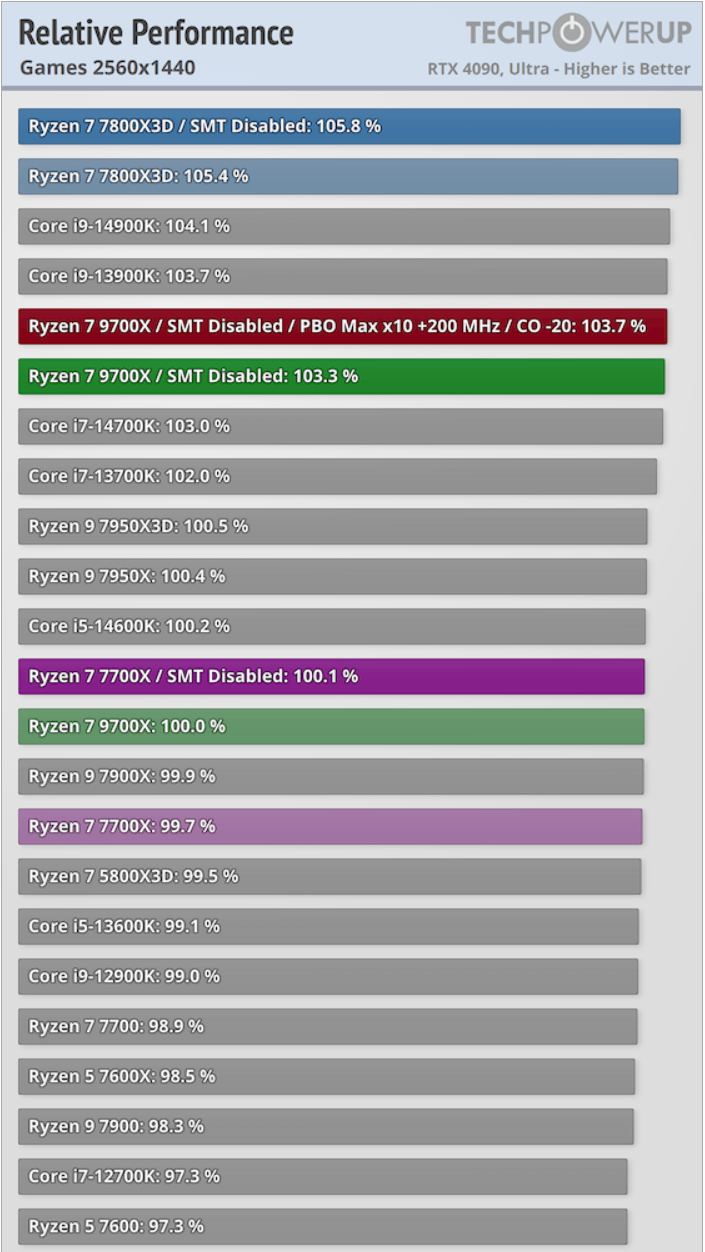
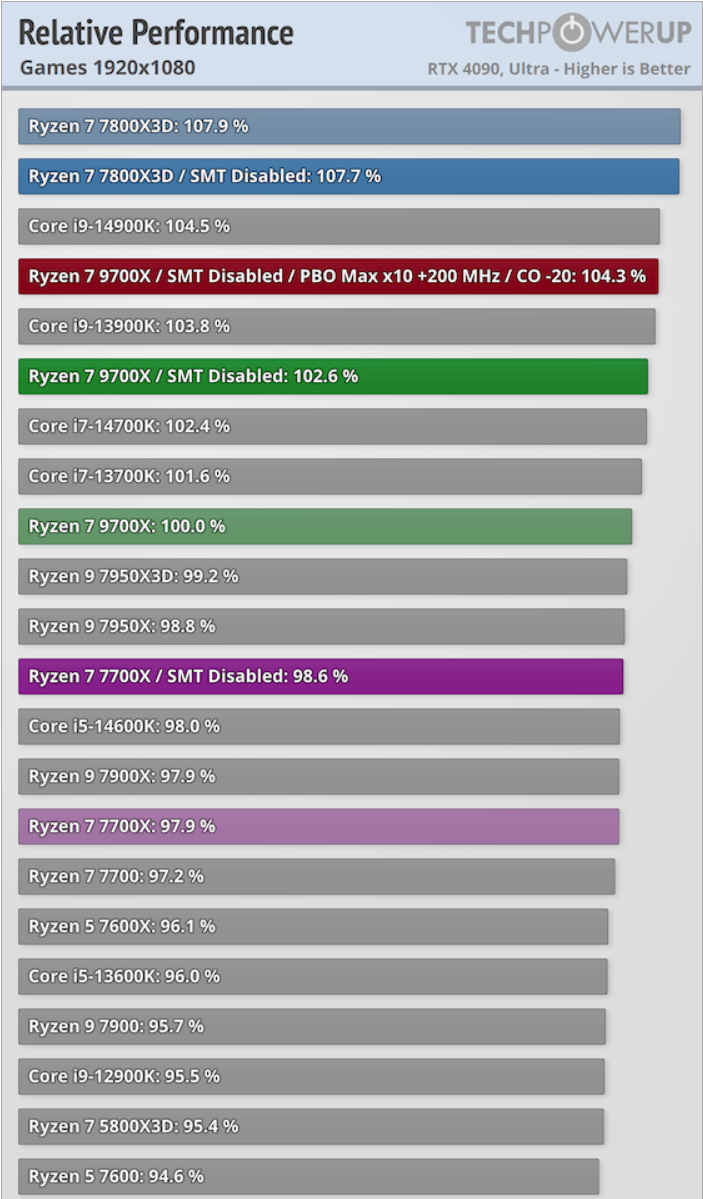
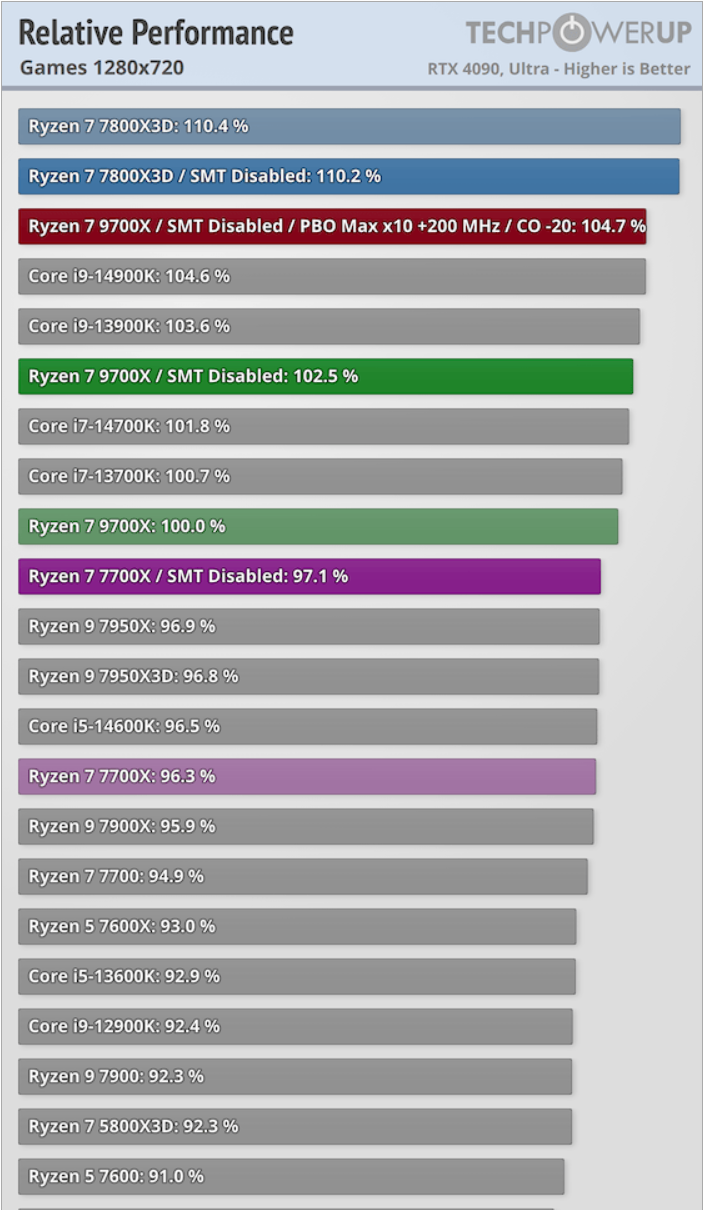
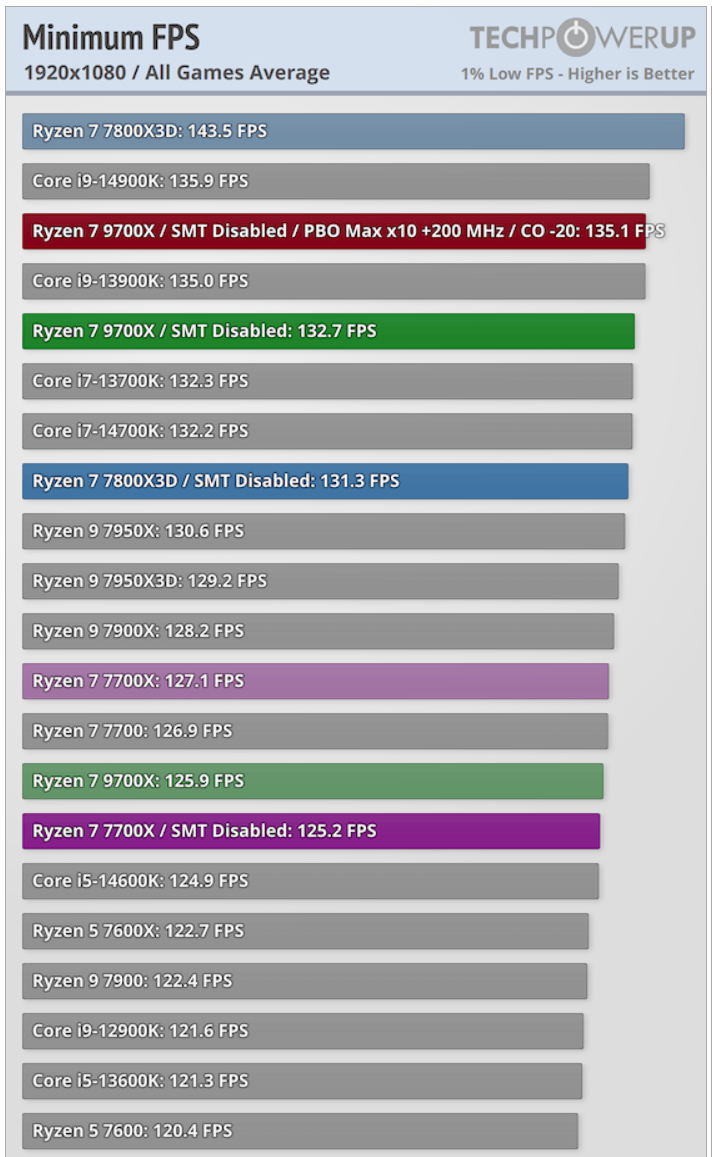
https://www.techpowerup.com/review/amd-ryzen-9-9700x-performance-smt-disabled/ During the course of our testing, we observed that Windows 11 was scheduling workloads on the 9700X in a manner that would try to saturate a single core first, by placing workloads on each of its logical threads. Additionally, the placement would put load on the CPPC2 "best" or "second-best" core (gold and silver in Ryzen Master)—which makes sense. However, if a highly demanding single threaded workload runs on one core, scheduling another demanding workload on the second thread of that core will result in lower overall performance. It would be better to place them on two separate cores, where they each have access to the full resources of that core. We hence set out to see if this is an SMT-specific problem. 9700X SMT disabled performance uplift @1080p: Baldur's Gate 3 +6.78% Remnant II +6.67% Spiderman Remastered +17.17% (!) and RT +15.82% (!) 9700X SMT disabled performance uplift @1440p: Baldur's Gate 3 +6.69% Spiderman Remastered +17.22% (!) and RT +18.73% (!) 9700X SMT disabled performance uplift @ 2160p: Baldur's Gate 3 +7.23% Spiderman Remastered +5.16% and RT +8.10% (!) And +11.61% CS 1080p minimum fps +12.63% Remnant II 1080p minimum fps +60.27% (!) Spiderman Remastered 1080p minimum fps +22.50% (!) Last of Us 1080p minimum fps +8.30% Baldur's Gate 3 2160p minimum fps +31.91% (!) Spiderman Remastered 2160p minimum fps

- 319 svar
-
- 4
-
-
-
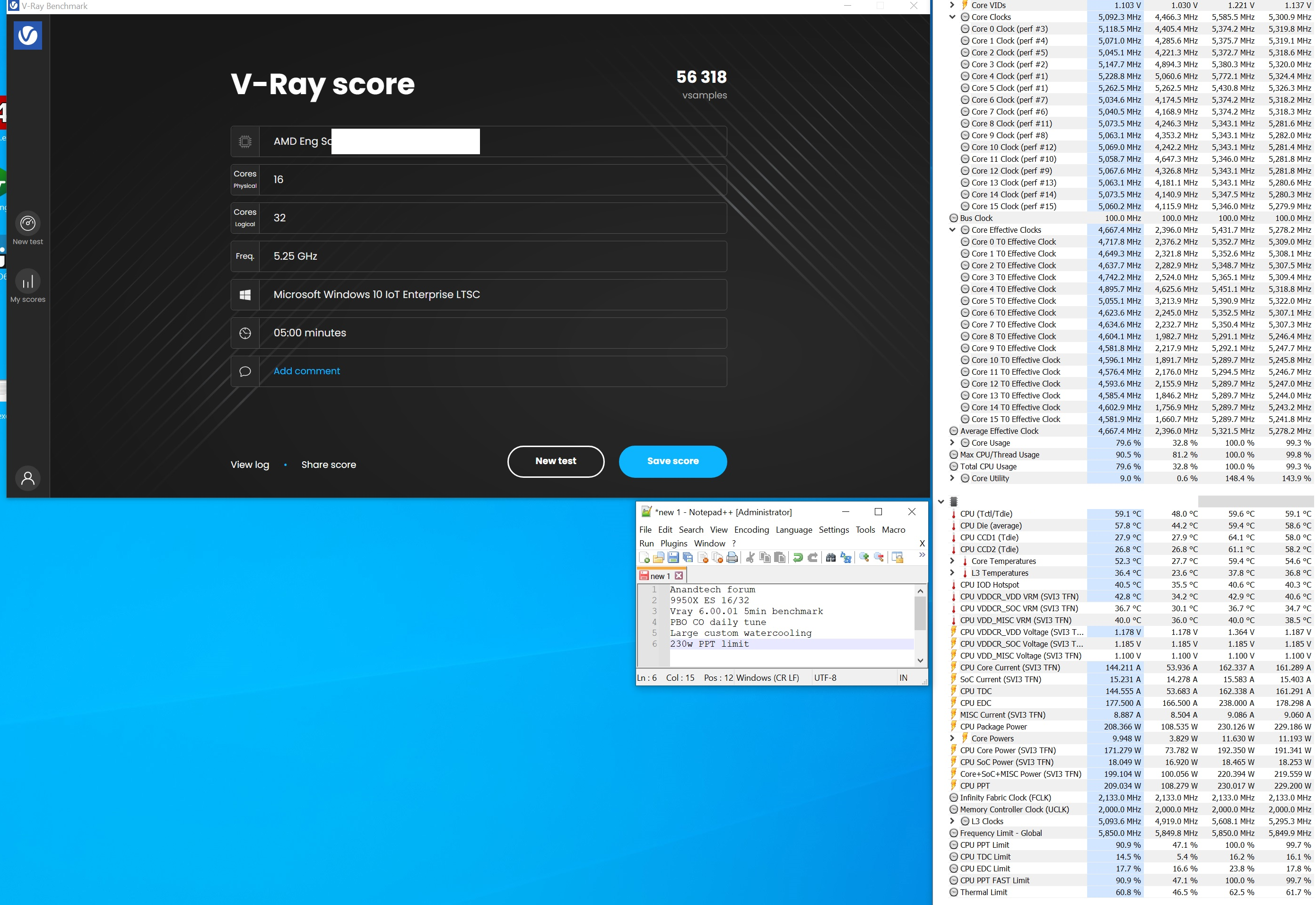
Nærmeste du kommer blir nok vray (gammel screen med bios som hadde lavere minneytelse)
- 319 svar
-
- 2
-
-
Jeg spurte deg tidligere konkret hva du ville se, fikk til svar "diverse programmer" 🤷♂️
-
Nærmeste du kommer er nok når du oppgraderer til nyeste bios og "alt bare fungerer".. Og vist du er heldig så er auto voltage / Proc / RTT settings tunet godt nok slik at en novice kan enable EXPO 8000 i bios og kjøre det uten noe ustabilitet (det som er målet man jobber mot) Og selvfølgelig, enhver vendor ønsker at deres hovedkort skal yte best, typ hva MSI prøver reklamere for her: https://wccftech.com/msi-am5-exclusive-memory-try-it-high-efficiency-mode-bios-feature-boost-amd-ryzen-9000-cpu-gaming-performance/ De skryter over 60ns latency i aida imens jeg kjører ~53ns..
-
Max tunet 9950X slår nok ikke max tunet 7800X3D overall i spill for å si det sånn.. Men for å ta et konkret eksempel, FF downtrail: Max OC 7800X3D = ~52k score i lav oppløsning Høy OC 9950X på nåværende agesa = ~48k (minne ytelse blir bedre og bedre for hver bios) Z5X3D som jeg ikke kan snakke om enda, godt over 60k Men skal også sies, en godt tunet 9950X kan oppnå 50k i R23 med MO-RA
- 319 svar
-
- 3
-

-
-
Hvordan benchmarks er det du ønsker se av 9950X ?
-
IO-die er 99% samme som 7000 series, foruten noen veldig små forskjeller kan som påvirke de veldig få som kjører helt øverst i ytelse sjiktet.. Så for den gjennomsnittlige bruker, forvent deg EXPO profiler for 6400MT/s og 8000MT/s som de største nyhetene med tanke på minnestøtte
- 319 svar
-
- 1
-
-
Der hadde dem jaggu klart å spore mine GB runs, så kan liksågreit dele her også (PBO CO + baseclock) https://wccftech.com/amd-ryzen-9-9950x-zen-5-flagship-cpu-benchmark-6-ghz-overclock/ Men jeg står fortsatt ved min tidligere post i denne tråden, om det er spillytelse du er etter, så anbefaler jeg vente et par måneder for X3D.. Ganske sikker på at disse blir lansert veldig nært Arrow Lake tidsrommet for å gjøre det vanskelig for Intel
- 319 svar
-
- 1
-
-
Kan dele at gjennomsnittling burde du ikke forvente noe ytelse økning i nærheten av dette, disse 3 benchmarkene var cherry-picka for wow factor 😅 Denne gangen stemmer faktisk meme'n, ~Zen5% i ganske mye dessverre Vanilla granite ridge er nok bare oppvarmingen til den virkelige konkurenten til arrow lake.. Og produksjoen av oppfølgeren til disse er kommet mye lengre enn mange forventer 🙃 Og denne gangen er det kun ST som er vcore limita på CCD0
- 319 svar
-
- 1
-